
What a young Labrador can teach you on the road to Canada

The truck had been running for twenty minutes, but I still hadn't pulled away.
Drake was sitting quietly in his kennel behind me. Every now and then I could hear his collar move or his paws shift against the floor. Outside, the morning was cold enough that my breath showed in the headlights.
Canada was still a long way north.
For many hunters, the excitement of a Canadian waterfowl trip starts the season off on the right foot. When you're taking your retriever with you, the trip actually starts weeks before you leave home.
Traveling long distances with a young Labrador can be one of the best experiences you can give a developing hunting dog, but it also requires preparation. The dog will be exposed to long hours in a vehicle, unfamiliar places, new fields, different cover, changing weather and long stretches of waiting between opportunities.
That makes a Canadian hunting trip more than a hunting trip.
It's another opportunity to develop your dog.
Start with the right dog
Before taking a young retriever on a major hunting trip, I want to see several qualities already developing.
Drive is important. A young Labrador should genuinely want to retrieve and should be excited about going to work. But drive by itself isn't enough. For a Canadian field hunt, I want a dog that can be steady.
A dog may spend an hour sitting in a field without making a retrieve. Birds may work the decoys and leave without a shot. Other hunters may shoot. The dog may watch birds fall hundreds of yards away.
He has to wait.
That doesn't mean taking the excitement out of the dog. It means teaching him that excitement doesn't automatically mean action.
Steadiness is controlled drive.
I also want trainability, good marking ability, confidence in new environments and enough endurance to handle a long day. A young dog doesn't have to be finished to go to Canada, but he needs a solid foundation.
The trip starts in the truck
One of the most overlooked parts of traveling with a retriever is the travel itself.
A long drive can be demanding for a young dog, particularly if he isn't accustomed to spending extended periods in a kennel.
Before leaving, give your dog experience with shorter trips. Let him learn that getting into the truck doesn't always mean immediately getting out and hunting.
A good travel routine might look something like this:
Kennel.
Drive.
Water.
Stretch.
Short walk.
Back in the truck.
Sleep.
Repeat.
The goal is to teach the dog to settle. That becomes especially important on a long trip. You don't want a young Labrador arriving at the hunting destination mentally exhausted because he spent two days pacing, whining or constantly anticipating the next activity.
A dog that learns how to relax in the kennel will arrive ready to hunt.
Don't make every stop a training session
When traveling with a young retriever, it's tempting to keep the dog active every time you stop.
Sometimes the best thing you can do is let him rest.
Give him water, allow him to stretch his legs, take care of his business and get him comfortable again.
The trip itself is part of the experience.
Your dog is learning that unfamiliar places are normal. Different smells are normal. Different people are normal. Sleeping somewhere other than home is normal.
Those experiences can build confidence that will serve him well in the field.
Prepare for the waiting
This may be the biggest lesson of a Canadian hunt.
Hunting isn't retrieving.
Retrieving is only one part of hunting.
A retriever may spend far more time sitting and watching than he does actually picking up birds.
That's particularly true in field hunting.
Drake experienced this firsthand. He had birds working around him, but he didn't get to retrieve every bird. He had to watch. He had to remain beside me. He had to wait for his name.
That is where steadiness becomes so valuable.
I don't want a Labrador who thinks every bird belongs to him.
I want one who understands that when I say his name, that's his opportunity.
Why a British field-bred Labradors can be a good fit
A good field-bred Labrador brings several qualities that can be valuable on a Canadian trip.
Drive helps the dog maintain enthusiasm through long hunting days.
Endurance allows him to handle repeated retrieves and difficult conditions.
Trainability allows you to communicate with him when situations become more complicated.
Marking ability helps him locate birds quickly and efficiently.
Confidence allows him to handle unfamiliar terrain, water, cover and surroundings.
And steadiness allows all of those qualities to work together.
That's an important distinction. The goal isn't simply to have the highest-drive dog in the field. The goal is to have a dog whose drive is controlled and directed.
Let the dog experience new places before the hunt
If possible, don't make the first unfamiliar experience the opening morning of the hunt.
Let your young retriever get out and explore safely. Walk him through different cover. Allow him to experience new sounds and smells. Give him time to settle into the new environment.
The more comfortable he becomes with the unfamiliar, the more mental energy he can devote to his actual job.
This is particularly important with a young dog.
You aren't trying to prove what the dog can do.
You're trying to give him experiences that help him mature.
Remember that Canada doesn't replace training
A trip to Canada can reveal a lot about a young Labrador, but it doesn't replace the fundamentals.
Before leaving, I want a dog that understands basic obedience, steadiness, whistle communication, the beginning of taking hand signals and retrieving fundamentals.
Canada is where you get to see those pieces come together in a real hunting environment.
The wind may be different.
The cover may be different.
The birds may behave differently.
The dog may be tired.
And the day may not go according to plan.
That's hunting.
And that's where you learn a lot about your retriever.
Take the trip for more than the birds
When Drake and I finally reached Canada, the long drive already felt like part of the experience.
By the time we settled into the field, he understood the rhythm.
Wait.
Watch.
Listen.
Stay connected.
Then, when his name was called, go to work.
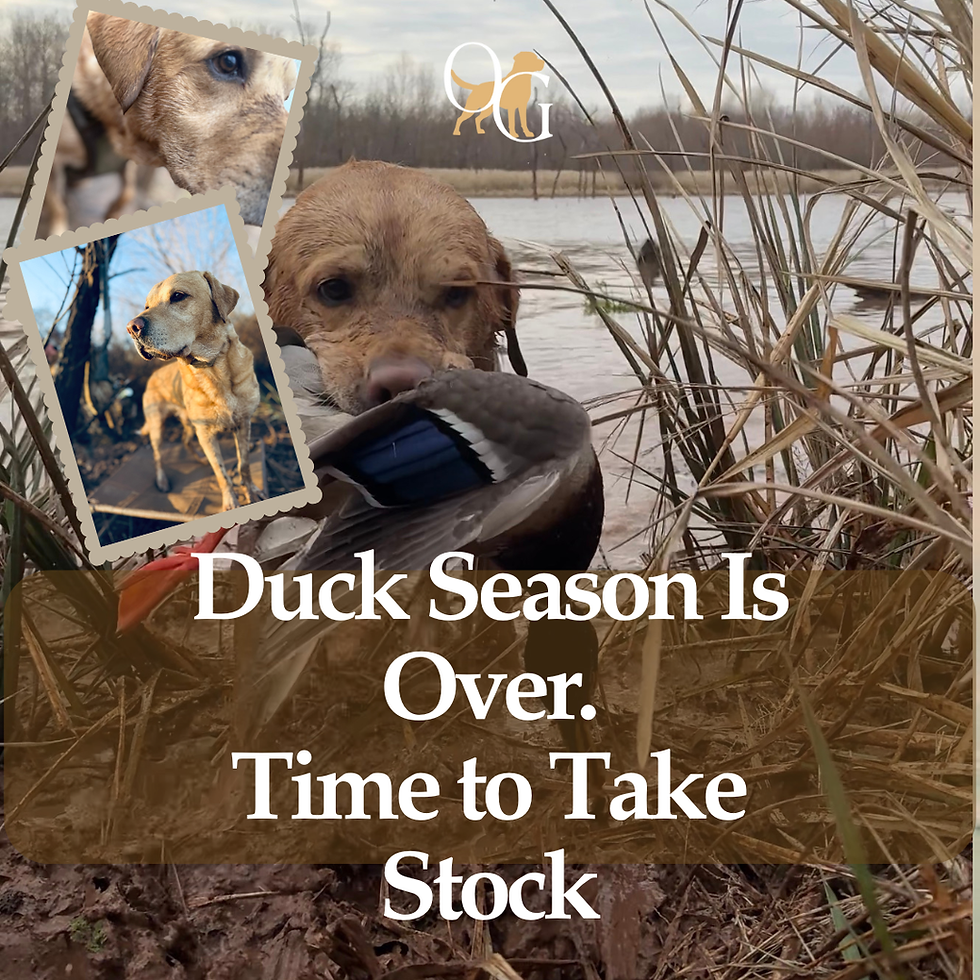
That morning, a mallard fell into the stubble. I waited and then said his name.
“Drake.”
He went.
He marked the bird, worked through the cover and came back with the mallard in his mouth.
But when I think back on that hunt, I don't remember the retrieve as much as I remember everything that came before it.
A young Labrador sitting beside me.
Waiting.
That is one of the great things about traveling with a young retriever. You aren't simply taking your dog hunting.
You're giving him experiences.
You're building confidence.
You're reinforcing his training.
And you're learning how he handles the world outside the familiar.
If you're considering taking your young Labrador to Canada, prepare for the entire adventure—not just the hunt. Get him comfortable with travel. Teach him to settle. Build steadiness. Develop his drive and trainability. Expose him to new environments.
And then go.
Put some miles on the truck.
Put some miles on the dog.
Let him experience something bigger than the training field.
Because someday, when you look back, you may not remember every bird.
You may remember the dog sitting beside you in a Canadian field, waiting for you to say his name.
Canada Retriever Travel Checklist
Before you head north, it helps to have a checklist. A successful Canadian hunting trip isn't just about getting your dog ready to retrieve birds. It's about making sure the dog, paperwork, vehicle, equipment and hunting plans are all ready before you leave home.
Before You Leave Home
☐ Confirm current Canadian entry requirements for your dog
☐ Check current Canadian requirements for bringing a dog across the U.S./Canada border
☐ Have your dog's identification and ownership information available
☐ Make sure your dog's veterinary records are current
☐ Confirm vaccination requirements and carry documentation
☐ Check current hunting regulations for the province you'll be visiting
☐ Review waterfowl licensing and permit requirements
☐ Confirm firearm and ammunition requirements for crossing the border
☐ Know where you'll be hunting and have permission where required
☐ Check your hunting outfitter's specific requirements
Retriever Preparation
☐ Make sure your dog is comfortable spending several hours in a kennel
☐ Practice longer vehicle trips before the Canadian trip
☐ Practice settling quietly after excitement
☐ Reinforce steadiness around gunfire and birds
☐ Practice sitting patiently while other dogs retrieve
☐ Work on whistle obedience and handling
☐ Practice retrieves in different types of cover
☐ Expose your dog to new fields, water and unfamiliar surroundings
☐ Don't introduce major new training concepts immediately before the trip
For a young retriever, I'd put particular emphasis on steadiness. Your dog may spend hours traveling and then spend another hour sitting in a field waiting for an opportunity. You want him excited when his name is called, but comfortable waiting when it isn't.
Travel Day
☐ Plenty of fresh water
☐ Food and normal feeding supplies
☐ Food and water bowls
☐ Kennel/crate secured properly in the vehicle☐ Leash and collar
☐ Identification tag
☐ Extra leash
☐ Waste bags
☐ Towels
☐ Dog bedding
☐ Extra food
☐ Basic first-aid supplies
☐ Any regular medications or supplements
☐ Copies of important veterinary and ownership documents
I'd also bring more towels than you think you'll need. A wet Labrador has a remarkable ability to make every surface within twenty feet wet.
During the Trip
☐ Maintain your dog's normal feeding routine as much as possible
☐ Give him opportunities to stretch and walk during the drive
☐ Keep him hydrated
☐ Give him time to rest
☐ Don't overwork a young dog simply because you're in Canada
☐ Watch for signs of fatigue
☐ Check for cuts, abrasions
☐ Give him adequate recovery time between hunts
Most importantly, pay attention to your dog.
A young Labrador doesn't know that you drove 1,500 miles to hunt Canada.
He doesn't know that you only have three days.
He doesn't care how much the trip cost.
He just knows what you ask him to do.
If he's tired, give him a break. If he's overwhelmed by a new environment, give him time. If he's doing well, don't feel like you have to keep pushing him.
The goal isn't to see how much you can get out of the dog on one trip.
The goal is to bring him home better than you found him.
One Last Check Before Crossing the Border
The regulations and documentation requirements for traveling internationally with a dog can change, so verify the current requirements with the appropriate Canadian and U.S. authorities before departure rather than relying on an old checklist.
And remember: hunting regulations, licenses, firearm requirements and provincial rules are separate from simply entering Canada with your dog. Check each requirement before you leave.
For an Oxford Gundogs trip, I'd put this simple reminder at the bottom:
Prepare the dog. Prepare the truck. Prepare the paperwork. Then enjoy the miles.
Because the trip to Canada is part of the hunt, too.


Comments