
The Keeper's Craft: Preserving the Art of Waterfowl and the Spirit of the Retriever

At first glance, a decoy floating in a misty marsh may seem like a simple tool — but recent studies from the Smithsonian American Art Museum reveal that waterfowl carving and painting are among the most enduring forms of American folk art. What began as a utilitarian necessity for hunters evolved into an art form rich in storytelling, culture, and reverence for the natural world.
From the tidal flats of the Chesapeake to the rocky shores of New England, waterfowl art tells the story of how humans have long admired, pursued, and ultimately sought to protect the birds that defined their landscapes. A Yale University Art Gallery analysis describes early decoy makers as “engineers of illusion,” craftsmen who blended art, science, and ecology long before the words “wildlife conservation” entered common speech.
During the 19th and early 20th centuries, hunters relied on carved wooden decoys not only for success in the blind but also as silent ambassadors of craftsmanship. Each bird — hand-shaped, weighted, and painted — carried the fingerprint of its maker. Some were simple silhouettes, others full-bodied sculptures that could have stood proudly in a gallery. Over time, these carvings became more than tools; they became heirlooms and stories carved in basswood and cedar.
A report from the Journal of American Folklore notes that many decoy carvers, particularly in regions like Maryland and Louisiana, viewed their craft as “a conversation between human and habitat.” Their designs captured not just physical likeness but behavioral truth — the subtle tilt of a mallard’s head, the restlessness of a teal. In that way, every brushstroke and carving cut was an act of observation, empathy, and artistry.
By the early 20th century, as conservationists like Aldo Leopold began championing wildlife management, artists and hunters found themselves on the same side of the blind. Exhibitions such as the annual Ward World Championship Wildfowl Carving Competition in Ocean City, Maryland, celebrated the fusion of art and conservation — proof that creativity and stewardship could coexist.
At the Florence Griswold Museum in Old Lyme, Connecticut, this connection is brought vividly to life. The exhibition Ducks and Geese: Hunting, Cooking, Conservation, and the Arts in Old Lyme explores how painters, carvers, and conservationists shaped the region’s culture. Artists from the early 1900s Lyme Art Colony — America’s answer to France’s Barbizon school — captured the grace of marshlands and estuaries, elevating hunting imagery into fine art. As curators note, these works reveal “a shared understanding between artist and outdoorsman — both observers of beauty, both participants in nature’s rhythm.”
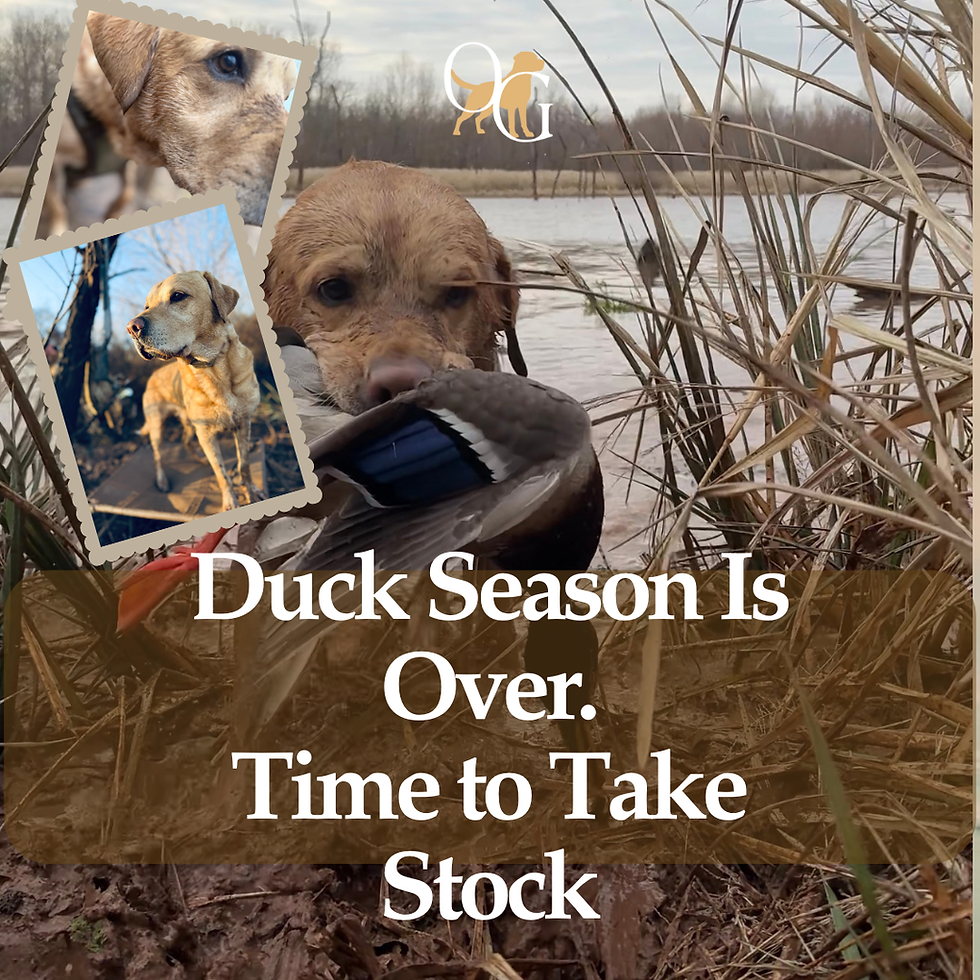
For the modern outdoorsman, this legacy lives on through more than paint and wood. It’s present in the ethos of kennels like Oxford Gundogs, where heritage, patience, and respect for nature define every step of training and breeding. Just as the great carvers studied the flight and temperament of birds, Oxford Gundogs studies the lineage and instinct of the British Labrador — shaping champions that are as graceful in the field as they are loyal at home.
What these stories remind us is that art and fieldcraft have never been separate worlds. They are twin expressions of devotion — one to beauty, one to function. To appreciate both is to recognize that the hunt, like art, is not about taking but understanding.
Whether it’s a hand-carved decoy resting on a shelf, a painting of geese over golden marshes, or a retriever steadying at the sound of wings, each speaks to a timeless pursuit: connection. Connection between hunter and habitat, artist and subject, dog and human.
And in an age when distractions come faster than the flight of teal, perhaps the most meaningful act is to pause — to observe, to create, and to connect.
That’s what Oxford Gundogs stands for: legacy, loyalty, and the art of doing things with purpose.
Reach out today to learn more, to connect with a community that still believes in craftsmanship, care, and the field as a place where beauty and purpose meet.
Sources:
Smithsonian American Art Museum. “Decoy Carving and the American Folk Tradition.”
Yale University Art Gallery. “Nature, Observation, and the Early American Artist.”
Journal of American Folklore, Vol. 135, No. 537 (2022): “Carving the Marsh: Waterfowl Art and Regional Identity


Comments