
Puppy Development: Raising the Next Generation of Champions
Oxford Gundogs’ Approach to Puppy Development
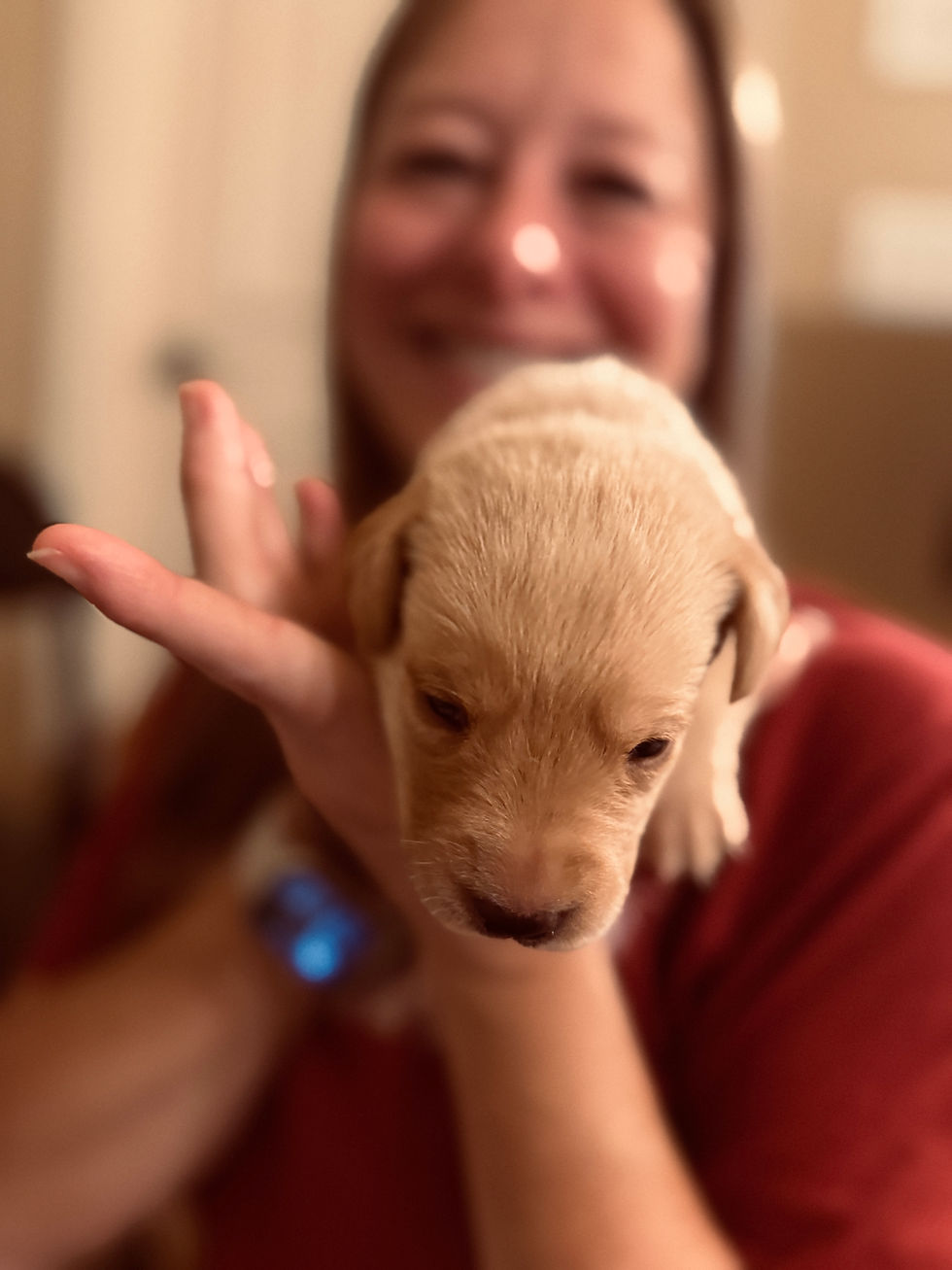
If you’ve ever watched a great Labrador in full stride on a crisp morning, retrieving with precision and focus, it’s easy to assume such skill is purely genetic. While champion bloodlines are undeniably important, the foundation for that behavior is laid far earlier — starting in the first weeks of life. Recent insights into retriever development reveal that early experiences, carefully guided, are critical to shaping dogs that are not only highly driven but also outstanding partners.
At Oxford Gundogs, we observe that puppies show indicators of drive and focus as early as three weeks old. Recognizing these early signs allows us to cultivate traits that will later define their work ethic and temperament. Drive, in particular, is a cornerstone of retriever excellence — but it must be nurtured deliberately. That’s why our training begins with methods designed to stimulate natural instincts without overwhelming the pup.
One unique way we motivate our dogs is by using wings from harvested birds tied to fishing poles. This technique introduces movement and scent in a controlled manner, encouraging a puppy to engage its natural hunting and retrieving instincts. Paired with this approach is our method of limited retrieves: puppies are only allowed two or three retrieves at a time, and each one is made a big deal. After a short session, the game is put aside for a couple of days. This ensures that every retrieve remains exciting and reinforces motivation rather than routine repetition. According to studies on early canine learning, intermittent reinforcement can enhance attention, drive, and engagement, particularly in working breeds (McMillan, 2020).
Early obedience training is equally important. At Oxford Gundogs, we begin with simple commands such as sit, stay, and heel, using treats exclusively for positive reinforcement. No punishment is applied at this stage. Puppies are still learning about the world and the humans in it; introducing corrections too early can create confusion or fear. Positive reinforcement lays the foundation for trust, partnership, and a willingness to perform under pressure later in life (AVSAB, 2021). Only when dogs mature and can understand the nuances of correction do we carefully layer in more advanced cues.
Socialization at Oxford Gundogs follows our philosophy of “Allleys, Acres and Adventures.” “Alleys refer to real-world stimuli- city streets, alleyways, box stores, cars driving by, and even city parks. These slow, steady introductions ensure pups remain confident, adaptable, and ready for any environment they will see. “Acres” represent wide-open spaces, countryside experiences, natural scents, running water, and game trails — all the environments a working Lab will encounter in adulthood. Puppies are introduced to these spaces early, so they learn to focus amidst natural distractions. “Adventures” represent gradual exposure to real-world adventures: trucks, boats, mud motors, kennel crates in the back of pickups, and the subtle noises associated with hunting equipment. By slowly introducing these elements at a safe distance and gradually increasing complexity, we ensure that the dogs grow up confident, adaptable, and unafraid of the environments they will later work in.
This combination of structured exposure, positive reinforcement, and motivated play has profound implications for retriever training. Puppies develop both drive and teamwork: the desire to chase, retrieve, and problem-solve, balanced with the willingness to collaborate with their handler. Observing their natural low tail wag — a hallmark of the British Standard Labrador — we can see early indicators of the balance between focus, initiative, and partnership, traits that are prized in championship-level dogs.
Research consistently supports the importance of early, deliberate training and socialization in working breeds. The University of Pennsylvania highlights that structured socialization and problem-solving in the first 12 weeks enhances a dog’s ability to handle stress and perform complex tasks later in life (McMillan, 2020). Meanwhile, the USDA emphasizes gradual exposure to environmental stimuli to prevent fear and overreaction in adulthood (USDA, 2019). Reinforcement-based methods, endorsed by the American Veterinary Society of Animal Behavior, produce lasting behavioral outcomes, improving responsiveness and reliability in challenging situations (AVSAB, 2021). Oxford Gundogs’ practices embody all of these principles, but with the added advantage of decades of selective breeding for international field trial champion bloodlines.
The results speak for themselves: Labradors raised under this philosophy demonstrate confidence, drive, and a genuine desire to work as part of a team. Puppies grow into dogs that are steady under pressure, focused on the task at hand, and deeply bonded to their handlers — qualities that distinguish championship-level retrievers from their peers.
For anyone raising a retriever, the message is clear: early experiences matter, and how you guide a puppy in its formative weeks can shape its entire future. At Oxford Gundogs, we take pride in identifying drive, fostering motivation, and building partnerships from day one. By combining genetics, structured exposure, positive reinforcement, and strategic motivation, we cultivate dogs that not only excel in the field but are also adaptable, reliable, and confident companions.
If you’re interested in learning more about how to nurture a puppy’s potential or exploring our puppy program at Oxford Gundogs, we welcome you to reach out and connect. Whether you’re preparing a future field champion or simply seeking a well-rounded, confident Labrador companion, the first steps start here — and we would love to share our experience and expertise with you.
References:
McMillan, F. D. (2020). Early-life experiences and canine behavior development. University of Pennsylvania School of Veterinary Medicine.
American Veterinary Society of Animal Behavior. (2021). Position statement on training methods and behavior modification.
United States Department of Agriculture. (2019). Dog socialization and early-life development guidelines.


Comments